
The Psychiatric Subject

Understanding a psychiatric subject is a means through which to understand how power operates to create an idealised concept of what it is to be a user of psychiatric services. This can provide a critique and reconceptualisation of the foundations of the gaze which often dictates the ways in which psychiatric systems and wider societies relate to people. 

Any consideration of a ‘subject’ owes itself to the work of Michel Foucault, who spent much of his career arguing how Western societies make human beings into subjects. This, he argued, occurs in two distinct ways, either by people being subjected to others through control or dependence or by having their subjective identity tied to a specific identity. These features constitute two aspects of a single dynamic process which is mediated by power as people are either disciplined, or perhaps more insidiously, self-correct their behaviour as they see themselves as being monitored. 

This is an important argument from a Mad lens because it invites us to consider and question the ways in which psychiatrization may impact on ourselves as individuals. It for example offers an understanding through which psychiatric labelling and diagnosis may impact on us, as the power to define entangles with our self-knowledge, leading us to redefine our expectations surrounding our relationship with the world. 


Psychiatric power

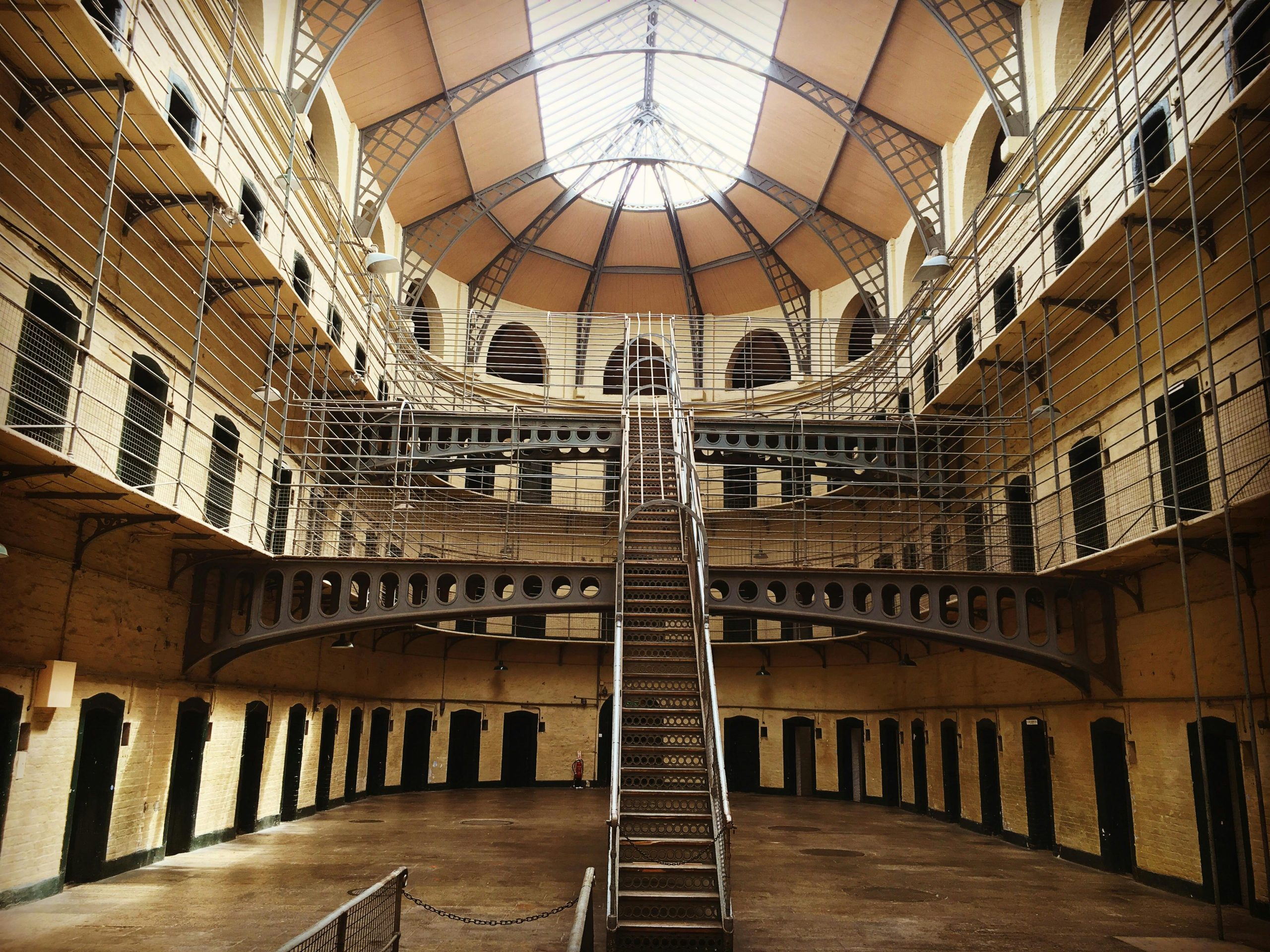
One famous example of the prevalence of disciplinary power made by Foucault was that of the panopticon, an idea for a prison originated by Jeremy Bentham in the 18th century which subjected inmates to the perpetual potential that they may be being watched. This is something is literally related to many people’s experiences on psychiatric wards, where there is a constant monitoring of people. Which can set the tone for psychiatric interventions in the community, in which psychiatric power can be experienced as a disindividualized gaze more interested in monitoring than understanding a subject.


Psychiatric knowledge

Key to Foucault’s theory is how knowledge is always a historical construction, reflecting the political interests, norms and values of the time in which it has been created. He therefore describes bodies of knowledge as a form of ‘discourse’, meaning that they are discursively constituted through the relationship between a writer and their position. Consequently something like a diagnosis can never mirror an objective reality but is built from a context in which certain behaviours are expected to be adhered to, intertwining with an individual’s subjective understanding of themself. 

This can be particularly problematic in regards to psychiatric diagnoses because of the ways they saturate people’s identity (where an illness comes to define the very being of an individual). An experience which can then be used to characterise somebody, as for example being dependent on others and requiring paternalistic support. Such a process is a way in which discussions around what it means to suffer from unusual manifestations of distress leads to the wielding of psychiatric power a way that changes somebody’s self-identification. 

It would however be simplistic to see power-knowledge relations as determining either an individual’s self-identification or their relationship to others. Instead, understanding how these processes can operate can be a means through which to see a potential site of resistance for challenging sanist and limiting rhetoric surrounding Mad persons. It can for example be a significant development to hold epistemic humility by accepting that psychiatric constructions are historically situated and so malleable and open to change. An idea that is further reflected in any understanding of a psychiatric subject, in which clear labels cannot be placed but each individual can be seen in a dynamic state of ‘becoming’.

It is also important to accept that whilst terms and understanding are constructed in relation to power, we still need some way of defining our experiences and relating to each other. Understanding these processes does not change that fact but may serve as inspiration for creating new power bases in which we can redefine the potential implications of improving dialogue between persons. Subsequently, it is not the knowledge that is used that is potentially problematic but the ways in which it is operationalised. Meaning challenging polemical practitioners who utilise knowledge in dogmatic ways is important to prevent them wielding discourses for their own, and not collaborative, ends. 

Structure and Agency

Any social/sociological understanding of a phenomenon or concept needs to interrogate the tensions which exist between seeing behaviour as structurally determined and the capacity of individuals to bring about change. It is perhaps more optimistic to view agency as something we all have access to but this often comes up against the reality of the resources or lack of that we are able to utilise in our pursuit of change. The result can be a sense of disempowerment, in which it becomes difficult to know where to direct attention in order to realise new ways of being in the world.


Agency

One way of encouraging a purposeful view of agency is by seeing it as brought about by ‘meaningful choices’ and how individuals acting with intentionality serve to undertake goal-directed behaviours which have an impact on their surroundings; such a view can be considered an ‘orthodox’ view of agency. Examples of this view include humanist ideologies (which see society as the totality of intersubjective relations between individuals) and ‘rational actor theory’ (which as a form of homoeconomics assumes agents will be rational in the sense they will be driven by ‘economic’ motives).

The problem with such views is that they fail to account for either the social constraints that may prevent people from undertaking certain actions or the extent people cooperate for collective purposes. This means orthodox perspectives on agency neglects the impact of power in mediating the possibility and scope of relational exchanges, so advocating for such theories can implicitly benefit those with power by failing to subject them to the necessary scrutiny. 


Structure

Structures can be considered as ‘supra-individual’ phenomena that exist in defining the parameters of communities and wider society. Structures are often not well defined but analysis of them can lead to deterministic views of human relations, undermining the efforts individuals and collectives make to bring about changes to interpret and redefine the ‘rules’ (explicit or otherwise) which determine the makeup of social life. There are a range of different structures, some more clearcut, such as the law but some more abstract, including the social construction of Madness. 

A critical realist perspective sees these as existing external to any individual, with them having powers, tendencies and potentials regardless of who is embedded within them. Consequently an analytical dualism is required which separates people from the structures they operate in, however such a theory fails to consider how structures come about and how they change over time. This is because it does not account for a dialogical or intersubjective perspective, with these being seen as a secondary concern. 


A middle way?

Philosophical ideas surrounding ‘situated practices’ have sought to breach the divide between structure and agency. These ideas take different forms but tend to recognise people as initiating actions but respecting that these are in some way defined in scope by the mediating effects of the structures they operate within. 

One means of perceiving this is to take the approach of Norbert Elias (1978) who theorised that the social ‘bondings’ which exist between people, both in a moment of interaction and where we share some perceived common trait or purpose, are as real as people themselves. It is from this that communities and societies are built and it means unintentional interdependencies lie at the heart of everything we do, having the impact of constraining our perceptions, purposes and actions of the future. As such power and subjectivity are interlinked in complex networks acted out through our agency. Whilst such an approach can be theoretically useful, it does risk collapsing at different points into a view which promotes the sanctity of either agency or structure, whilst it has been argued it fails to critically respond to the ways in which power is concentrated up.

To build beyond this it has been proposed that we begin to see agency as a relational and not an individual phenomenon. This involves a perspective shift to see structures not as external to each of us but built into the very fabric of how we interact with the world. Consequently structures stop being objective facts but are instead filtered through our subjective realities before being mediated in the intersubjective realm.


Structure and Agency as constructs

It is important to respect that ideas surrounding structure and agency are themselves constructs with historical pathways. That is, they are both defined by individuals in a moment they encounter them and so the products of agency, but this is in some way defined by wider social expectations of the meanings of the word, so they are structurally constructed in a way that has changed over time. 

Consequently one way of undoing the complexities of dividing structure and agency is to respect that they are analytically distinct categories. This allows somebody to indicate instances in which they see an agency operating without necessarily determining the impact on an existing structure. Likewise outlining how structures may impact people without being deterministic can be a useful conceptual tool. In other words whilst interdependent, the concepts can have autonomy from each other.

To best achieve this it is important to consider what the goals of any action are and potential constraints that may prevent them from happening. This can encourage targeted responses to potential bottlenecks of action, which can be challenged to prevent people from being limited to achieve the change they want to. This encourages a pragmatic view of structures as ongoing material processes open to change.