

Radical Psychoanalysis

Radical psychoanalysis is aligned with Mad ideals. It looks to move beyond an individualised, adaptive model of distress, instead developing understanding of the barriers that get in the way of us connecting with others. Radical psychoanalysis builds on Freudian notions of the unconscious but shifts its focus from something hidden inside us, to ideas that are played out relationally through our interactions with others. Radical psychoanalysis argues that it is only by understanding the ways we have been blindsided by and internalised oppressive practices that we can grow to offer the zeal necessary to bring about social change. It is important to note that psychoanalytic concepts can cause problems when applied to the world outside the clinic and are more a way of rendering our relationship with ourselves, and by extension others, more clear.

We can understand this if we consider how psychoanalysis in its history has regularly been aligned with an ethics of power and domination. In which the psychoanalyst used their position to define people’s worldviews in less than helpful ways. This is despite psychoanalysis often also being associated with emancipatory ideals, as the analysts would hear the concerns their patients brought to the clinic and see that the distinction between ‘external reality’ and ourselves is not clear cut but something we actively create and creates us.


Alienation

Whereas psychology and psychiatry are interested in helping us to adapt to the current ways things are, often reinforcing feelings of alienation, radical psychoanalysis looks to provide the tools through which we can constructively work with conflict within ourselves and consequently between ourselves and others. That is, it understands that symptoms are not ‘facts of life’ but socially situated feelings towards the world. This allows for a questioning of that which is taken for granted. Inviting us to ask whether things have to be the way they are and ways in which we can strive for a more just global society. So, offering a way in which we can connect our internal struggles with wider efforts to bring about change.


The Ego

In the modern age the ego, our sense of self, is regularly promoted as the sight of rationality and by extension our very humanity. This is the site of inquiry for the psy sciences, who essentialise humanity as the workings of complicated machines to be tinkered with to achieve optimum efficiency. This is a mere caricature of life and beyond just being a poor reflection of how experiences are actually lived but under its prestigious weight can crush divergent ideas of what the good life could mean. That is, if life becomes a service to a ‘rationally’ attuned ego, we risk failing to see how ideas of what is rational are politically and culturally created. Threatening to shut us off from others and a full experience of life.

This shows how radical psychoanalysis offers a pathway to foster our own sense of self in the world not just by looking inwards but in how we exist in a dialogue with the world in which we live. By offering a critique of how this is morphed by power, radical psychoanalysis can move us away from navel gazing and encourage us to find ways to connect to others and their struggles as a way of finding meaning. Although this should not be seen as coming easily, with division central to all our experience (we can only ever communicate part of a whole for example), it offers an aspiration that speaks to the heart of Mad Studies and the Mad movement. 


Reading

For an introduction to these ideas try Ian Parker’s and David Pavón-Cuéllar’s, Revolution and Psychoanalysis.

Mad Studies

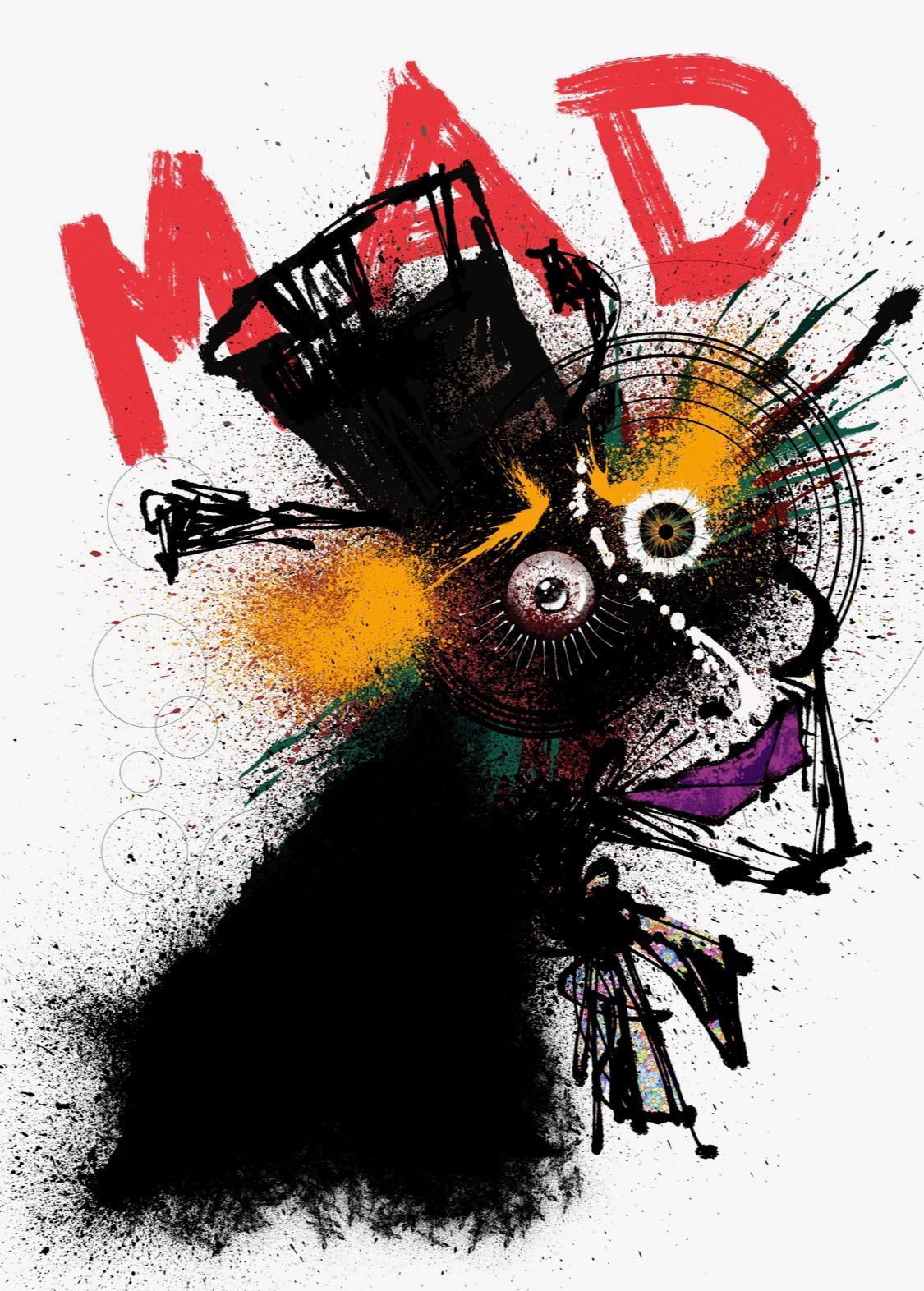
Mad Studies is a social movement which seeks to use lived experience to critique dominant ‘psy’ discourses surrounding experiences of distress. In order to achieve this Mad Studies has looked to become a knowledge base constituting an in/discipline on the borders of academia. The purpose of this is to find a way to challenge ‘expert’ portraits of distress, which too often paint life in a normative fashion, that fails to respect the reality of the lived experience of those who have suffered or continue to do so. Within a normative model, ‘patients’ are often presented as exhibiting some malady that may be corrected with the correct biopsychosocial intervention and so become an object to be cured, instead of a human to be understood. This is particularly problematic with the biopsychosocial model itself often being a fallacy, with psychological and social interventions either not being provided or being seen as less significant than pharmaceutical provisions.

Therefore Richard Ingram has argued that we need to be allowed to make (non)sense together, in which we question the value of ‘coherence’, instead creating spaces where we are able to be more genuinely authentic. A part of this requires Mad Studies to maintain its roots in community engagement but also to practise a ‘sly normativity’ in academia. Mad practitioners can show there is some method in the madness whilst simultaneously preserving the madness in the method. One means of achieving this could be producing work that resembles other bodies of knowledge, with such mimicry potentially having a subversive effect on wider academia. This is likely to lead to criticism, not just from psychiatry, but other academics who feel threatened by a challenge to their processes. 

The Survivor Movement

The survivor movement can be considered as the means through which those who have been defined as Mad have organised to resist psychiatric oppression. This is particularly the case when it has involved self-organised, grass-roots initiatives which can form as learning opportunities and inspiration for further movements against the cultural dominance of the current psychiatric system.


A Brief History

People have been critical of asylums since their inception, however collective and organised resistance in the form of survivor involvement only have evidence from the 20th century onwards. That is, original movements in the 19th century were drawn from social elites who looked to draw attention to the processes through which people were deemed clinically insane and their improper treatment once inside. This was prevalent between around 1845 and the 1860s but then burnt out for around a century.

The 1960s and 1970s saw near-simultaneous formation of self-organised campaigns among psychiatric patients and ex-patients. Some of these groups coalesced around radical professionals of the time (such as R.D. Laing and David Cooper) whilst some distanced themselves. The most significant group to form in Britain was the Mental Patients Union (MPU), which was started by social workers. MPU, representing patients and rejecting medical orthodoxy, was defined by an ethos of self organisation. 

Other groups that came before included the short-lived Scottish Union of Mental Patients and the looser network of People Not Psychiatry. Building on other autonomous movements at the time, one organisation CAPO (Campaign Against Psychiatric Oppression), which formed in 1985, was known for adopting a punk ethos and the direct-action tactics of radical political groups. It is from the actions of all these groups that a growing advocacy movement developed and language was altered to begin to reflect ‘service users’ and ‘survivors’ instead of ‘patients’. Activism continues in the current guise of Mad Pride and Mad Studies.


Activist sources and the history of psychiatry

Researching the survivor movement can be a way of uncovering an alternative history of psychiatry, which places those at its heart at the core of analysis. This promotes agency of the psychiatric subject and undermines narratives which construct them as a by-product of a clinical gaze. The problem however arises in uncovering source material, due to the ephemeral and temporal nature of movements. This means stories often come from the privileged type of story teller in the form of middle or upper class biographies, instead of conceptualising the survivor movement as a whole and situating it in the lived histories of ordinary people. 


Activism and the practice of history

It is important for activists to assert their own histories so they are not lost in the footprints of the dominant cultural narrative. They can show the impacts activist involvement can have and how rights now enjoyed are not an inevitable consequence of history but needed to be fought for. Furthermore, this contributes to a recalibration of the kinds of knowledges which are seen as credible in wider discussions around Madness. History is rarely the telling of facts but serves to culturally construct our understanding of the present by shaping our understanding of the past.